

This module is designed to explore trends, emerging topics, medication options, general recommendations, and practical considerations for the treatment of OUD in pregnancy. Learners will explore how to manage pregnant and postpartum patient cases with medications for OUD.
Learning Objectives
Upon completion of this module, participants will be able to:
- Evaluate the impact of OUD on maternal and fetal health outcomes
- Explore evidence-based guidelines and recommendations for the screening, diagnosis, and management of OUD during pregnancy
- Evaluated and assess the pharmacological differences in pregnancy and option for treatment of OUD
- Define neonatal opioid withdrawal syndrome (NOWS), including its clinical presentation, risk factors, and diagnostic criteria, to facilitate early identification and intervention

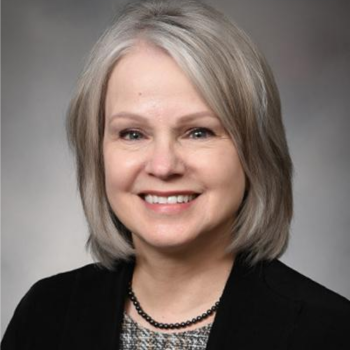
Board certified in Obstetrics and Gynecology, Maternal-Fetal Medicine, and Addiction Medicine, Dr. Parilla is a recognized leader in the care of pregnant patients with substance use disorders. She is an active member of American Society of Addiction Medicine and received the March of Dimes Jonas Salk Health Leadership Physician Award for her work in this field. Dr. Parilla earned her MD with Distinction in Research from Renaissance School of Medicine at Stony Brook University and completed training at NYU Langone Hospital Long Island and Northwestern University.
Join perinatal stakeholders around Kentucky as we hear from our neighbors in Tennessee about Substance Use Disorder (SUD) in the perinatal period. KyPQC is delighted to welcome Dr. Jessica Young, an OBGYN and Addiction Medicine provider at Vanderbilt. Dr. Young has been touring with the Tennessee Initiative for Perinatal Quality Care to bring regional trainings pertaining to SUD and referral best practices related to perinatal mental health.


Dr. Jessica Young is an Obstetrician–Gynecologist and Addiction Medicine specialist and an Associate Professor at Vanderbilt University Medical Center (VUMC). She earned both her medical degree and Master of Public Health (MPH) and completed her residency in Obstetrics and Gynecology at VUMC.
Dr. Young is the pioneer and medical director of Firefly, an innovative outpatient addiction treatment program that integrates substance use disorder treatment with prenatal, postpartum, and primary care for pregnant individuals.
Board-certified in Obstetrics–Gynecology and Addiction Medicine, Dr. Young is a nationally recognized speaker on substance use disorder in pregnancy and a dedicated advocate for pregnant people and their families
The Viral Hepatitis Program (VHP) focuses on prevention and enhanced surveillance of adult hepatitis B, adult hepatitis C, and perinatal hepatitis C. It collaborates closely with the Reportable Disease Section and Immunizations Branch at the Kentucky Department for Public Health (KDPH) to address hepatitis-related public health needs. VHP emphasizes harm reduction and priorities the voices of individuals with lived experience, particularly people who inject drugs (PWID). The program works to rapidly detect and respond to outbreaks of acute hepatitis B and C. It also collects and analyzes surveillance data to inform interventions and support statewide elimination planning. Ultimately, VHP seeks to improve access to testing, treatment, and prevention services in communities disproportionately impacted by drug use.


Ms. Murphy received her bachelor’s from the University of Georgia in 2017. She continued her education at New York University in the School of Global Public Health. She earned her master’s in public health with a focus in Epidemiology, in May of 2020. Shortly after graduation, she joined Kentucky’s Department for Public Health in the Division of Epidemiology and Health Planning, working as a COVID-19 Data Epidemiologist. She then moved to Kentucky’s Perinatal Quality Collaborative (KYPQC) where her work focused on quality improvement projects. She currently serves as an epidemiologist in the Viral Hepatitis Program and coordinates perinatal hepatitis C work. She is passionate about leading impactful, data driven work aimed at lowering vertical transmission rates of hepatitis C and improving health outcomes for both mothers and their infants.

Katie Gardner, RN, BSN, is a public health nurse and health educator with 18 years of experience in clinical care, including harm reduction and infectious disease care and prevention. Katie currently serves on the board of the Kentucky Youth Health Network, which works to create public awareness of health risks and promote healthy outcomes for Kentucky youth. In her current role as Program Coordinator for the Viral Hepatitis Program at the Kentucky Department for Public Health, Katie focuses on increasing hepatitis C education and care in communities most impacted by hepatitis C and the overdose epidemic.
Join us for an important learning session regarding the current substance use landscape in Kentucky. Dr. Mirsky will discuss the high risk substance of fentanyl use in pregnancy, the trends and available treatment modalities for decreasing maternal and neonatal morbidity and mortality. The potential novel neonatal syndrome related to fentanyl use in pregnancy and recent findings will be introduced.


Dr. Ljuba Mirsky, MD is a Maternal-Fetal-Medicine Fellow at the University of Kentucky (UK). She attended UK for her undergraduate studies and medical school, then completed her Obstetrics and Gynecology residency at the University of Tennessee Medical Center in Knoxville, TN. She has always been interested in substance use in pregnancy and completed research on Neonatal Opioid Withdrawal Syndrome (NOWS) in medical school and on a novel neonatal syndrome related to fentanyl exposure in fellowship. She currently works at the Pathways clinic when on rotation and is passionate about providing equitable care to this underserved population.
“TeamBirth tools are built as two design principles - Teamwork and Simplicity. TeamBirth is creating an industry-standard process for safe and dignified childbirth and providing the essential tools to implement it. The core components of TeamBirth delivery are structured team huddles and a shared planning tool, providing standardization to create equality.”


Trisha Short is a Senior Clinical Implementation Specialist with the Delivery Decisions Initiative at Ariadne Labs, a research and social impact program focused on transforming childbirth care worldwide so that every person can start or grow their family with dignity. Trisha has been an obstetrical nurse for 18 years, specializing in high-risk obstetrics and quality improvement. She joined the Ariadne team in 2021 after leading the successful implementation of TeamBirth at her hospital in Tulsa, Oklahoma. Trisha currently oversees the management and implementation of the TeamBirth spread occurring nationwide, serving as the primary contact between Ariadne and hundreds of hospitals and partner organizations. She earned her BSN from the University of Oklahoma. She is currently pursuing her Masters in Nursing Leadership and Management.

Barbara O'Brien has been the Director of the Oklahoma Perinatal Quality Improvement Collaborative since 2006. She holds her Master of Science in Nursing from University of Oklahoma College of Nursing. She has been a part of the OK MMRC, the AWHONN Maternal Morbidity and Mortality Task Force, and several other leading groups for maternal and infant safety. She was the March of Dimes 2011 Oklahoma Nurse of the Year for Women's Health.
Following the completion of this course, learners should be able to:
- Understand how trauma may impact individuals
- Discuss the Trauma-Informed Care Continuum and apply Trauma-Informed Approach to care
- Explain the Freedom House Women's Addiction Recovery Program

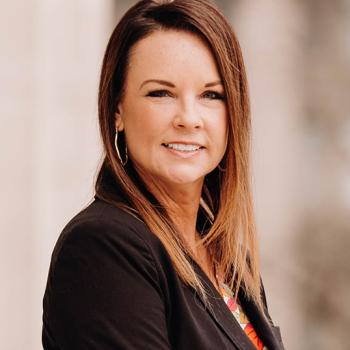
Following the completion of this course, learners should be able to: Jennifer Hancock is the President and CEO of Volunteers of America of Mid-States. Jennifer earned her bachelor's and master's degrees in social work from the University of Kentucky, where she began a career dedicated to social justice and community building
Jennifer has served in many capacities during her more than 20 years of professional leadership in the nonprofit sector and in her 16 years advancing the mission of VOA. Under her leadership, VOA has become a nationally recognized expert in providing family-focused and results-oriented solutions for the opioid and addiction crisis. Working closely with a wide range of elected officials and community leaders, the organization has earned consistent recognition for providing best practice care across nearly 50 programs.
Following the completion of this course, learners should be able to:
- Understand the importance of screening women and birthing people for perinatal mental health disorders.
- Identify at least one well established screening tool to utilize in their practice with women and birthing people.
- Identify at least one intervention or evidence-based practice to treat women who screen positive for a perinatal mental health disorder.


Dr. Young received her Psy.D. in Counseling Psychology from Carlow University. Dr. Young’s passion for social justice concerns previously connected her to Mercy Behavioral Health, a legacy program of the Sisters of Mercy of the America’s ministry in Pittsburgh, Pennsylvania. There she provided comprehensive mental health and substance abuse services to underserved populations for eleven years. Her research interests include trauma-informed services for women, harm reduction psychotherapy and the clinical implications of bias in the therapeutic relationship. She is a member of both the American Psychological Association and Kentucky Psychological Association.

Dr. Chapman earned her Ph.D. in Counseling Psychology from the University of Kentucky. Her primary research interests are in evaluating components of psychotherapy process and outcome, both in person and via telepsychology, to develop evidence-based practices that increase the access to and quality of mental health care amongst underserved populations. Although Dr. Chapman uses an integration of interpersonal process, cognitive behavioral therapy and mindfulness theories to inform her work, her clinical approach is ultimately informed by a client-directed outcome-informed (CDOI) model. She is currently a member of the APA Division 17 Section for the Promotion of Psychotherapy Science, is involved with the Society for Psychotherapy Research and the KPA.
Following the completion of this course, learners should be able to:
- Differentiate MI skills appropriate vs potentially inappropriate for birthing hospitals.
-
Develop strategies for implementing MI in birthing hospital settings.
- Identify key strategies for MI improvement and coaching.


Dr. Devin Oller is a primary care and addiction medicine physician at the University of Kentucky. He is a graduate of The College of William and Mary and the Temple University School of Medicine. Dr. Oller completed residency in Internal Medicine and a fellowship in Rural Health Leadership at the Massachusetts General Hospital. Prior to his academic appointment at the University of Kentucky College of Medicine, he served as faculty at Harvard Medical School. Dr. Devin Oller directs KY-OPEN, the state-wide education series on issues related to the care of people living with substance use disorders. He also serves as the director of the Primary Care Internal Medicine residency at UK. Dr. Oller is well published in peer-reviewed literature, he is a prominent regional, national and international speaker, he leads numerous trainings targeting both students and peers, and he participates in peer review for several prominent publications. Dr. Oller is a member of the American Society of Addiction Medicine and the Kentucky Medical Society.